
 By
By 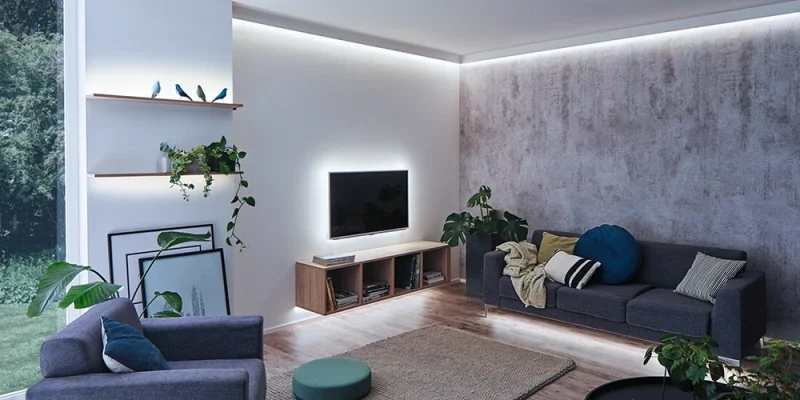
Starting with the Room’s Reality
Living room lighting planning is most useful when it starts with the specific room rather than with general principles. What is the ceiling height? Where are the seating areas relative to the windows and to each other? What activities actually happen in this room, and when? Is the room primarily used by one person, a couple, a family with children, or for entertaining? These specific answers shape a lighting plan that works for the actual room more effectively than general guidelines applied uniformly.
The visual character the room needs to achieve – warm and residential, bright and functional, atmospheric in the evening, variable across the day – also shapes fixture selection. A room that needs to feel both bright during daytime use and intimate in the evening needs different fixtures and controls than one used primarily for evening activities. Starting with this character objective prevents the selection of fixtures that serve one mode well and another poorly.
Existing architectural features affect lighting planning in ways that are easy to overlook. A tray ceiling with the recess already wired for a fixture constrains the overhead option; an existing vaulted ceiling with skylight changes the ambient light equation significantly; a fireplace as the room’s visual focal point may need accent lighting that the room doesn’t currently have.
Fixture Selection for Different Living Room Configurations
Living room light fixtures in standard-ceiling rooms (8 to 9 feet) should prioritize flush or semi-flush central fixtures that provide ambient light without reducing headroom, supplemented by floor and table lamps for task and reading areas. In rooms with higher ceilings (10 feet or more), the overhead fixture can have more visual presence – a pendant or chandelier that fills the ceiling height more appropriately than a flush mount would.
Open-plan rooms where the living area connects directly to kitchen and dining areas need lighting that reads as distinct per zone without requiring physical separation. Pendant lights over the dining table, recessed lighting over the kitchen work surfaces, and a floor lamp arrangement in the living seating area all operate as independent lighting systems that define each zone visually while existing within a shared space.
Energy Star certified living room fixtures confirm efficiency across the multiple fixture types that a layered lighting plan involves – floor lamps, table lamps, and overhead fixtures all operating for extended periods in the home’s primary gathering space.
Practical Implementation and Phasing
A complete living room lighting update – replacing the overhead fixture, adding floor and table lamps, and installing dimmer switches – can be accomplished in a single weekend project or phased across time. Phasing typically starts with the dimmer installation (immediate benefit across all activities), then floor and table lamps (task and ambient supplementation), and the overhead fixture last (which may require professional installation if it involves more than a direct fixture swap).
The decision about when to invest in smart lighting controls – voice control, scene setting, scheduling – is most logically made when replacing existing switches or adding significant new fixtures. Adding smart controls to an existing system requires compatible bulbs or fixtures alongside the switches; planning for smart capability from the outset of a lighting update is less disruptive than retrofitting it later.
The budget allocation across a living room lighting update should weight task and ambient layers over accent lighting – the layers that serve daily use most directly. Accent lighting is the layer that produces the most dramatic photographs and is the most expensive to install, but it is also the layer whose absence is least felt in day-to-day use. Getting the ambient and task layers right produces a room that works well every day; adding accent lighting later produces a room that also looks exceptional.











Comments