
 By
By late August, lawns around central Mississippi start to split open. Cracks in the yard get wide enough to swallow a car key, and flower beds pull away from the brick. A door that closed fine in spring suddenly needs a shoulder. Then the autumn rains arrive, the ground soaks up the water, and everything shifts back the other way. Most homeowners notice the doors and the drywall. Fewer think about the water and sewer lines sitting in that same soil, getting squeezed and released year after year.
That slow push and pull is a familiar story for Anglin Plumbing Service, which works across Brandon and nearby communities, where many homes sit on concrete slabs poured over clay that refuses to stay put. The team covers leak detection, sewer line repair, hydro jetting and emergency calls for homes and businesses. Ground movement turns out to be behind a good share of the trouble they find under floors and in yards.
The Clay With a Reputation
The soil in question is Yazoo clay, a dense blue gray marine clay that runs beneath much of Hinds, Madison and Rankin counties. Its minerals behave like a sponge. When they get wet, the clay swells with surprising force, and when they dry out, it shrinks and cracks. Mississippi state geologists published a plain-language report on Yazoo clay back in 1988. The problems it describes, from broken foundations to sticking windows, still show up in neighborhoods built long after it was written.
For plumbing, the key point is that the movement is rarely even. One corner of a house might sit over soil that stays damp in the shade while the opposite side bakes in the afternoon sun. A slab on that ground flexes slightly, and every pipe running through or beneath it has to flex too.
What Bending Ground Does to a Pipe
Pipes are built to carry water. They aren’t built to absorb years of lifting and settling. Under a slab, the stress tends to show up in a few predictable places.
Supply lines often fail where they rise through the concrete. Copper that rubs against a slab edge as it moves can wear thin over time. The hot water line usually goes first, because heat and expansion add to the strain. Joints are another weak point. A fitting that was perfectly tight on installation day can loosen after enough seasons of tiny movements.
Drain and sewer lines suffer in a different way. They depend on gravity and are laid at a gentle slope so waste moves toward the street. When the soil under one section settles, the pipe can develop a low spot that plumbers call a belly. Water and solids collect there instead of flowing, so the drain backs up again weeks after it was cleared. Older homes with cast iron under the slab have it worse, since corroded pipe walls crack more easily under load.
The Leak That Feeds Itself
This is the part that catches people off guard. A small leak under a slab does more than waste water. It soaks the clay around it, and wet Yazoo clay swells. The swelling lifts that part of the slab, which puts new stress on nearby pipes and fittings, which can open new leaks. In sandy soil a drip like that might be a minor repair. In this clay it can start a cycle of heaving and cracking.
That’s also why foundation contractors and plumbers in the area often end up at the same house. A floor that seems to be rising in the middle of a room might be moving because of the weather, or because of water from a broken line underneath. Telling those apart early saves a lot of money.
Clues Worth Paying Attention To
Under-slab problems rarely announce themselves. They usually show up as a cluster of small oddities, and any one of them is easy to dismiss.
- A water bill that climbs even though nothing has changed in the house
- The meter dial still turning when every faucet and appliance is off
- A warm patch on tile or flooring, often from a hot water line
- Damp carpet or a musty smell with no visible source
- Several drains slowing at once, or a toilet gurgling when the tub drains
- New cracks in floor tile or drywall near plumbing walls
- Soggy soil or unusually green growth along one side of the foundation
Checking the meter is the simplest test anyone can do. Turn off everything that uses water, note the reading, wait an hour or two, and look again. If the reading has moved, water is going somewhere it shouldn’t.
Finding Damage Nobody Can See
Nobody wants to start breaking concrete on a hunch, and modern diagnostics mostly avoid that. For supply lines, a plumber can shut off the hot and cold sides separately and pressure test each one to see which is losing water. Acoustic equipment picks up the hiss of escaping water through the slab, and thermal imaging can trace a hot line by the heat it gives off.
Sewer lines get a camera. A small waterproof camera fed through a cleanout shows bellies, offset joints, cracks and roots in real time. The footage also shows exactly how far from the access point the problem is. If a belly is holding debris, hydro jetting can clear it. Cleaning won’t fix the slope, though, and that usually means replacing a section.
Repairs That Respect Moving Soil
Fixing a pipe in clay country means planning for the next round of movement as well as the current break. A few approaches make a real difference.
Rerouting is often smarter than digging. Instead of tunneling under the slab to patch a failed line, a plumber may abandon it and run new supply piping through the attic or walls, where soil movement can’t reach it. PEX tubing works well for this because it bends instead of cracking and needs fewer joints.
For sewer lines, trenchless lining or pipe bursting can replace damaged sections without tearing up a driveway or a floor. Where pipes pass through the foundation, sleeves and flexible connections give them room to shift without shearing. None of this makes a plumbing system immune, but it improves the odds considerably.
Keeping the Ground Steady Around the House
Swings in soil moisture drive the whole problem, so the most useful thing a homeowner can do is keep the soil near the foundation at a steadier moisture level all year.
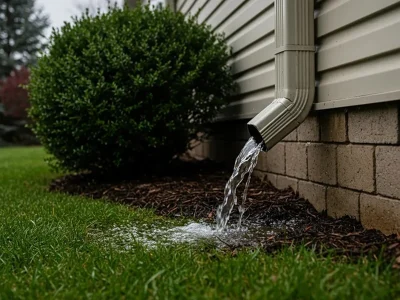
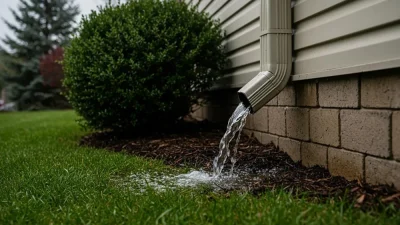
Gutters matter more than people expect. Downspouts that dump water right at the slab soak one side of the house during storms. Extensions that carry runoff several feet away help even things out, and the ground should slope away from the walls rather than toward them.
During long dry spells, some homeowners run a soaker hose a short distance from the foundation on a regular schedule so the clay doesn’t shrink away from the slab. The goal is steady moisture, not saturation, since overwatering causes its own swelling. Large trees close to the house can pull moisture from under one side, so new trees are better planted well back from the walls.
In an older home, it also pays to have a camera run through the main sewer line every few years and to follow up on any slab leak warning sign quickly instead of waiting for the next bill. In clay that moves with every season, small problems seldom stay small. A house that gets checked between the droughts and the downpours usually costs far less to keep sound.






Comments